



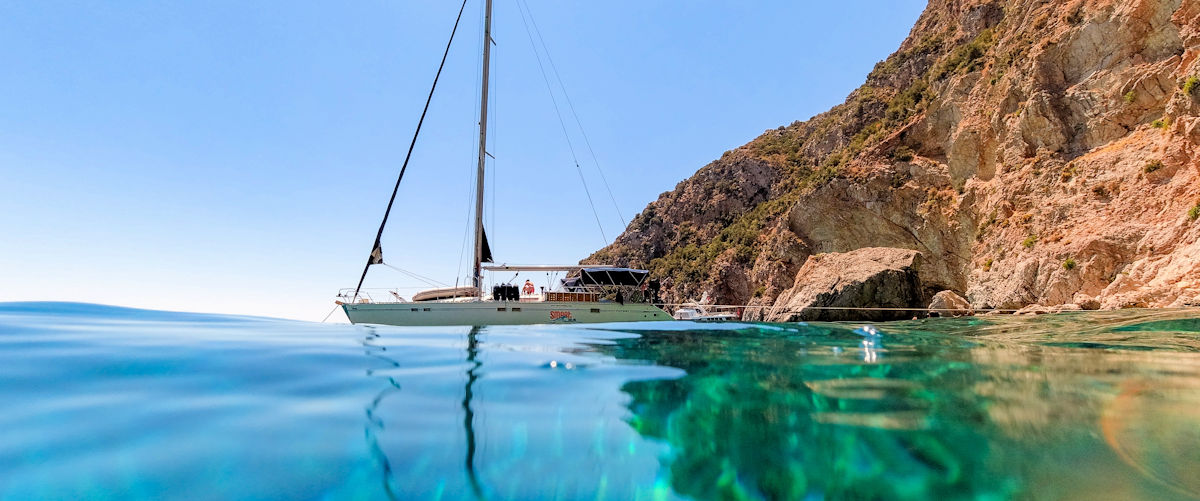
If you are looking for IYT sailing courses in Marmaris because you want to move from being a passenger to becoming a confident skipper, the IYT International Bareboat Skipper course is an important step. It is designed for sailors who want the knowledge and practical skills needed to command a sailing yacht within the certificate's operating limitations.
At Smart Sailing Academy, the emphasis is on practical learning. Instead of spending your entire course in a classroom, you learn aboard a sailing yacht, combining daily theory with real boat handling, navigation, anchoring, manoeuvring and passage planning. This approach can make the transition to independent sailing much less intimidating for beginners and developing sailors.
Our sailing training programme takes place in the South Aegean, giving students the opportunity to learn while actually moving between bays, harbours and coastal destinations.
What Is the IYT Bareboat Skipper Qualification?
The IYT International Bareboat Skipper qualification is intended for candidates who wish to train to command a vessel up to 24 metres, subject to the certificate's stated limitations, including fair weather and being within sight of land. Smart Sailing's current course information describes the qualification as the competence level commonly required when chartering in areas such as the Mediterranean where charter operations impose cruising-area restrictions.
Important: A sailing certificate does not remove the skipper's responsibility to make safe decisions. Before chartering, always check the charter company's requirements, local regulations, insurance conditions, weather limitations and the exact limitations of your certificate.
The Bareboat Skipper course is therefore not simply about learning how to make a yacht move. It is about learning how to plan, prepare, operate and manage a sailing yacht safely.
Who Is the IYT Bareboat Skipper Course in Marmaris For?
The course is suitable for sailors who want to develop from competent crew into someone capable of taking responsibility for a yacht. It can be particularly valuable for people who have sailed with friends or family but still feel uncertain about taking the helm, entering a marina or making decisions when conditions change.
It is also suitable for sailors planning a future Mediterranean charter. The South Aegean provides an excellent practical environment because the training can involve coastal passages, sheltered anchorages, marina manoeuvres and changing wind conditions.
It may be right for you if:
- You want to become a more independent sailor.
- You want to charter a sailing yacht without hiring a skipper, subject to charter-company requirements.
- You want structured practical training rather than only classroom theory.
- You want to improve your navigation and passage-planning skills.
- You want to become more comfortable with marina manoeuvres and anchoring.
- You want to progress toward higher-level qualifications such as Yachtmaster.
What Does an IYT Bareboat Skipper Course Cover?
The course covers a broad range of skipper responsibilities. The objective is to develop practical competence rather than simply memorise information for an examination.
1. Skipper Responsibilities and Safety
A skipper is responsible for the yacht, crew and voyage. Training therefore begins with preparation and safety. You learn how to conduct crew safety checks, inspect the hull and rig, understand onboard machinery and systems, and consider fuel, water and range before departure.
Safety comes before sailing performance. A good skipper knows when to reef, when to reduce sail, when to alter the planned route and, most importantly, when not to leave harbour.
2. Weather and Meteorology
Weather is one of the biggest factors affecting a coastal sailing passage. You need to understand weather forecasts, local wind patterns, sea and land breezes, cloud formations and the effect of changing conditions on the yacht.
In the Aegean, local knowledge and careful weather assessment are especially useful. A forecast may look manageable offshore while local wind acceleration around headlands or between islands creates significantly stronger conditions.
3. Navigation and Passage Planning
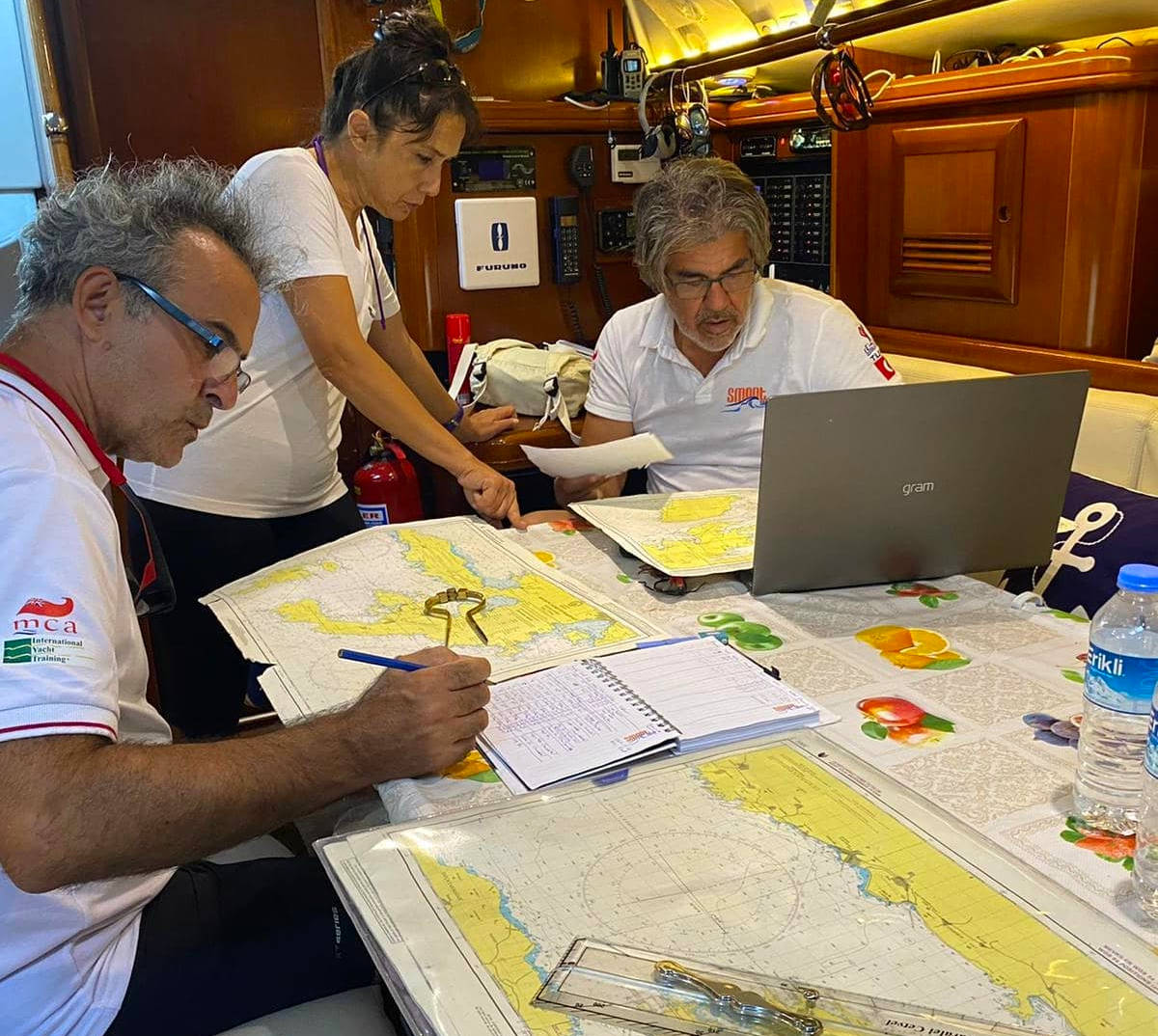
Navigation is a core part of becoming a competent skipper. You learn how to plan a coastal passage, consider weather and sea conditions, identify hazards, calculate distances and develop a sensible passage strategy.
Training also introduces position fixing, pilotage, tides and currents, collision regulations, lights, shapes and sounds. These skills help you understand what is happening around the yacht rather than relying entirely on an electronic chartplotter.
A good skipper should always have a clear idea of where the yacht is, where it is going, what hazards are ahead and what alternatives are available.
4. Sail Handling and Reefing
Sail handling is another essential part of the course. You learn how to select an appropriate sail plan, trim the sails and reduce sail as wind strength increases.
Reefing should never be treated as a sign that the skipper has failed. Reefing early is a professional sailing decision. If conditions are building, reducing sail before the yacht becomes difficult to control is normally far easier and safer than waiting until the crew are already struggling.
The exact reefing method depends on the yacht's rig and reefing system. During practical training, students should learn the yacht-specific procedure before leaving harbour and practise it under controlled conditions.
Heavy-weather rule: Do not wait until the yacht is overpowered before reducing sail. Plan ahead, communicate with the crew and reef while the yacht remains under control.
5. Boat Handling and Marina Manoeuvres
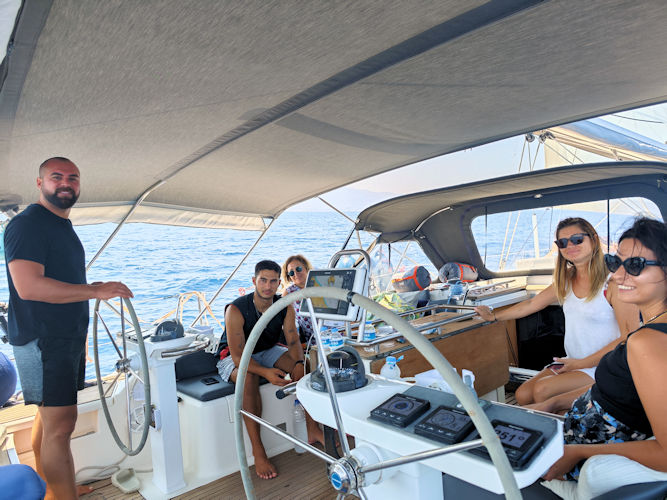
Many new skippers feel more nervous about entering a marina than sailing offshore. This is understandable. A yacht has limited room to manoeuvre, wind and current can affect the boat quickly, and there may be other vessels nearby.
Practical training includes manoeuvring in confined areas, coming alongside, mooring, anchoring, use of ropes and knots, and general deck work.
The goal is not to perform every manoeuvre perfectly on the first attempt. The goal is to develop a repeatable process: assess the conditions, brief the crew, decide on the manoeuvre, communicate clearly and always have an alternative plan.
6. Anchoring and Coastal Cruising
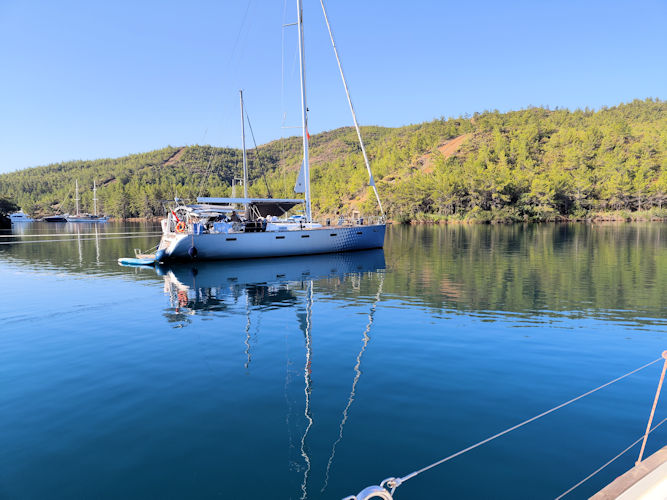
Anchoring is an everyday cruising skill in the Aegean. A competent skipper needs to consider depth, holding ground, swinging room, wind direction, forecast changes and the presence of other boats before dropping the anchor.
After anchoring, you should confirm that the yacht is holding and establish a safe reference point for monitoring its position. A beautiful bay is not automatically a safe anchorage.
Why Take IYT Sailing Courses in Marmaris?
Marmaris and the surrounding South Aegean provide a particularly useful environment for practical sailing education. Students can experience sheltered bays, open coastal passages, marina manoeuvres, anchoring and changing local wind conditions within a relatively compact cruising region.
Smart Sailing's training is conducted at sea rather than separating theory completely from practical sailing. The current training programme describes daily theoretical instruction followed by practical sailing while moving toward another stopover point.
This makes IYT sailing courses in Marmaris particularly relevant to sailors who want their training to resemble the type of sailing they intend to do after qualification.
Why Hands-On Sailing Training Matters
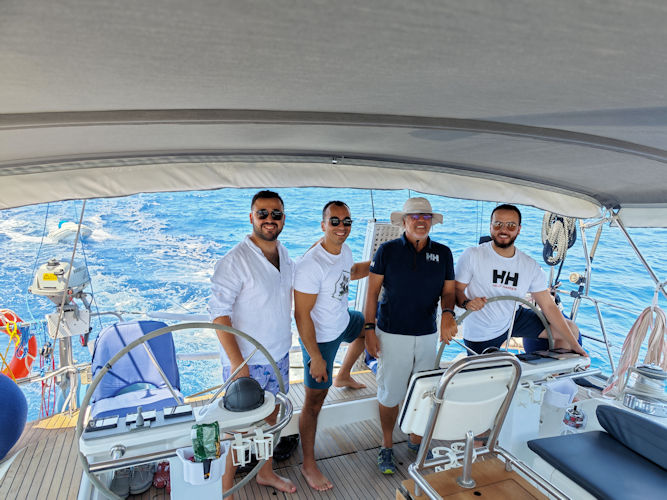
Reading about sailing is useful, but it cannot replace actually handling a yacht. Confidence develops when you repeatedly perform the tasks that initially make you nervous.
During practical training, students can progressively take responsibility for steering, sail handling, navigation, manoeuvring and passage planning while the instructor remains available to supervise and correct mistakes.
This is particularly important for beginners. The objective is not to eliminate respect for the sea. It is to replace unnecessary anxiety with knowledge, preparation and practical experience.
IYT Bareboat Skipper and ICC Sailing Certification in Turkey
Many sailors are also interested in an ICC sailing certificate in Turkey. The relationship between an IYT qualification and an ICC depends on the qualification held, the required endorsement and the applicant's eligibility.
Smart Sailing's current ICC information lists the IYT International Bareboat Skipper Sail qualification among the IYT certificates that can be used toward an ICC Sail endorsement, subject to the applicable eligibility requirements.
You can read the current requirements on our ICC Licence page before booking.
Important: ICC eligibility is not identical for every applicant. Residency, nationality, issuing authority and the exact certificate held can affect eligibility. Always confirm your individual situation before making travel or charter arrangements.
What About IYT International Crew and Flotilla Skipper?
Not every sailor needs to begin with Bareboat Skipper. If you are completely new to sailing, an IYT International Crew course can provide a useful foundation in sailing terminology, safety, basic boat handling and life aboard a yacht.
The IYT Flotilla Skipper qualification is another step in the IYT pathway and is designed for sailors developing greater responsibility while operating within the limitations of the qualification.
Choosing the correct level is important. A good sailing school should assess your existing experience and explain honestly which course is appropriate rather than encouraging you to take a qualification before you are ready.
Can Bareboat Skipper Lead to Yachtmaster?
Yes, Bareboat Skipper can be an important stage in a longer sailing-development pathway. Once you have gained practical experience, miles and confidence, you may decide to progress toward IYT Yachtmaster Coastal, Offshore or Ocean, depending on your goals and experience.
The key point is that a certificate is not a substitute for experience. Keep a detailed logbook, sail in different conditions, practise manoeuvres regularly and gradually increase the complexity of your passages.
Learning to Sail While Enjoying an Aegean Sailing Vacation
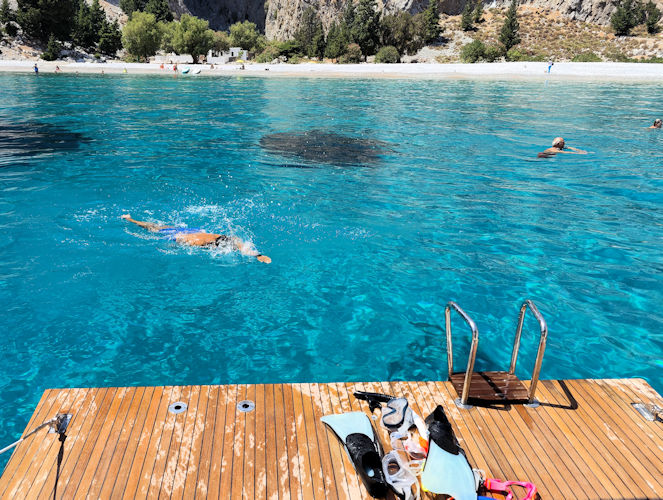
One advantage of learning in the South Aegean is that the training can also be a genuine sailing vacation. Between lessons and practical exercises, there is time to experience the coastline, swim, explore bays and enjoy life aboard a yacht.
Smart Sailing's current training programme describes the courses as live-aboard training voyages, combining theoretical and practical education with cruising around the Aegean and Greek Islands.
The result is a learning environment that is serious about safety and competence without making the experience unnecessarily stressful.
How to Choose an IYT Certified Sailing School in Marmaris
When comparing an IYT certified sailing school in Marmaris, look beyond the certificate itself. Ask how much practical sailing time you will receive, how many students will be aboard, what type of yacht will be used and whether the instructor will actively coach you during manoeuvres.
- Instructor experience: Ask about the instructor's qualifications and practical experience.
- Student numbers: Smaller groups generally provide more opportunities to handle the yacht.
- Practical training: Make sure the course includes real navigation, sail handling and manoeuvring.
- Safety culture: A professional school should put preparation and safety before speed.
- Training yacht: Understand what type and size of yacht you will actually train on.
- Course pathway: Ask what progression is available after Bareboat Skipper.
Smart Sailing's current course information states that its training is conducted aboard comfortable, fully equipped yachts with IYT-certified instructors and practical instruction throughout the voyage.
From Marmaris to Your First Bareboat Charter
The ultimate objective for many students is simple: to finish training feeling capable of taking responsibility for a yacht rather than feeling overwhelmed by it.
That confidence comes from preparation. Before your first independent charter, review the yacht's systems, plan your route carefully, study the weather, brief your crew, understand the local regulations and establish conservative limits for wind and sea conditions.
A responsible skipper does not try to prove how much wind they can handle. A responsible skipper creates enough margin that the crew, yacht and voyage remain safe when conditions are less favourable than expected.
Start Your IYT Bareboat Skipper Training in Marmaris
If your goal is to become a confident coastal skipper, the IYT Bareboat Skipper Marmaris pathway can give you a structured combination of theory, navigation and practical boat handling in a real cruising environment.
Explore the IYT Bareboat Skipper course, review the Sailing Training programme, or check the current course prices and available options.
If you are unsure whether Bareboat Skipper is the right starting point, contact Smart Sailing and discuss your previous sailing experience before choosing your course.
Ready to Become a More Confident Skipper?
Learn sailing at sea, practise real boat handling and develop the skills required to take greater responsibility aboard a yacht.