
Marmaris
Hits: 0
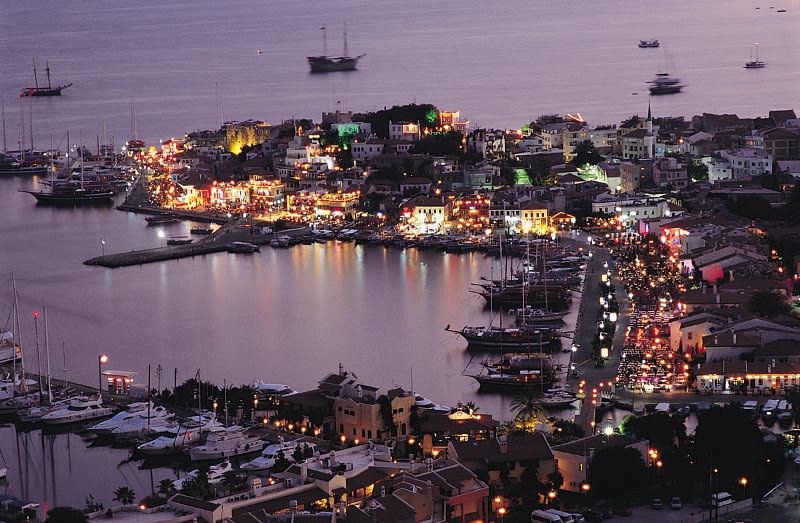
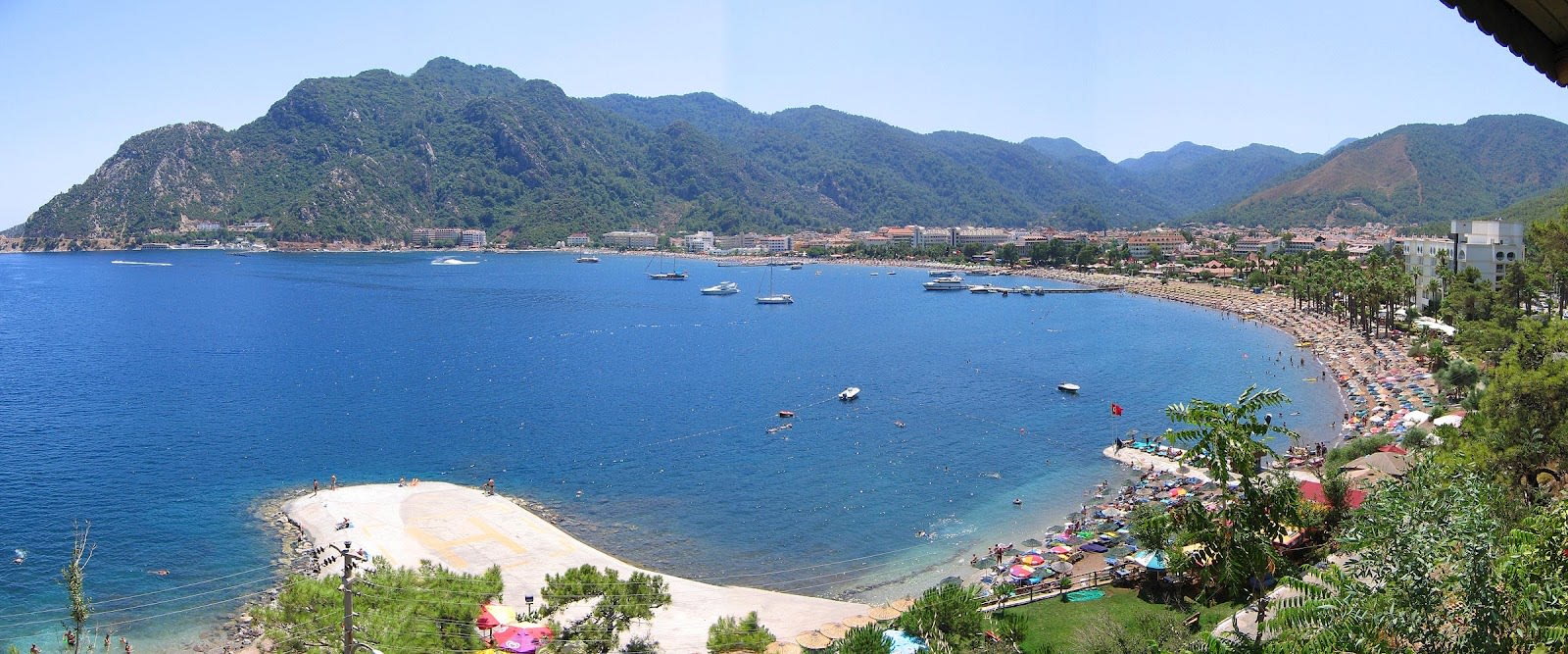
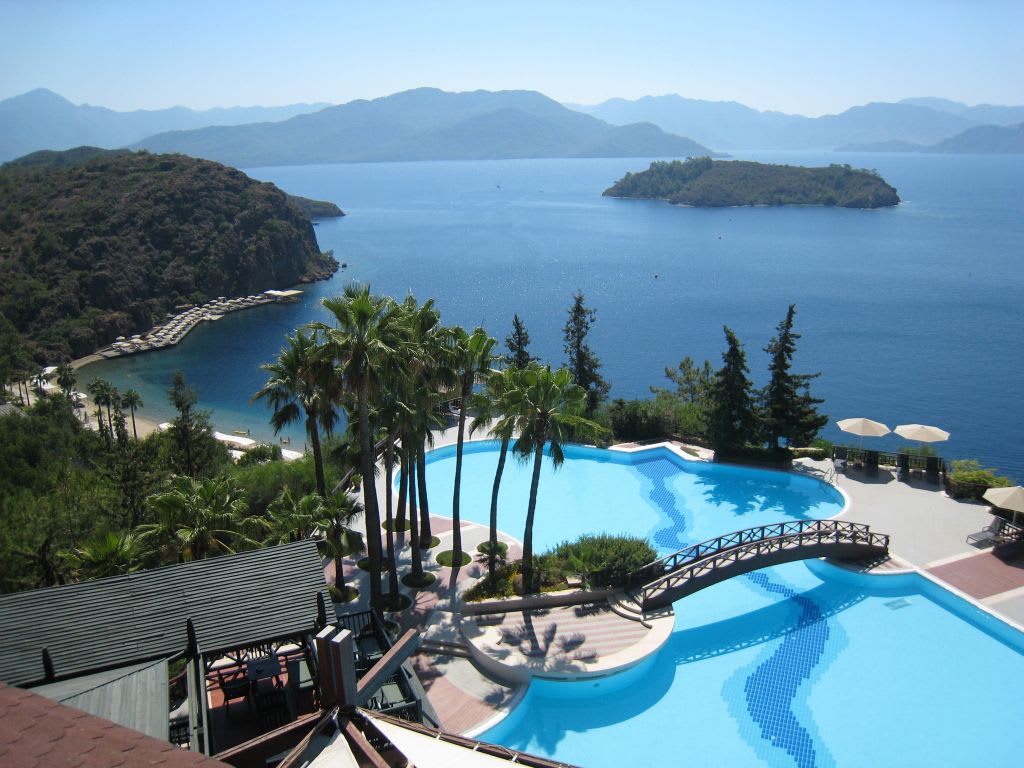
There is a unique bay which is opening of a heaven where the Aegean and the Mediterranean embraces. It lays its back to the green of pine forests. Marmaris, Once Herodotus said "with the world's most beautiful sky," is a modern tourist city.
The Location of Marmaris
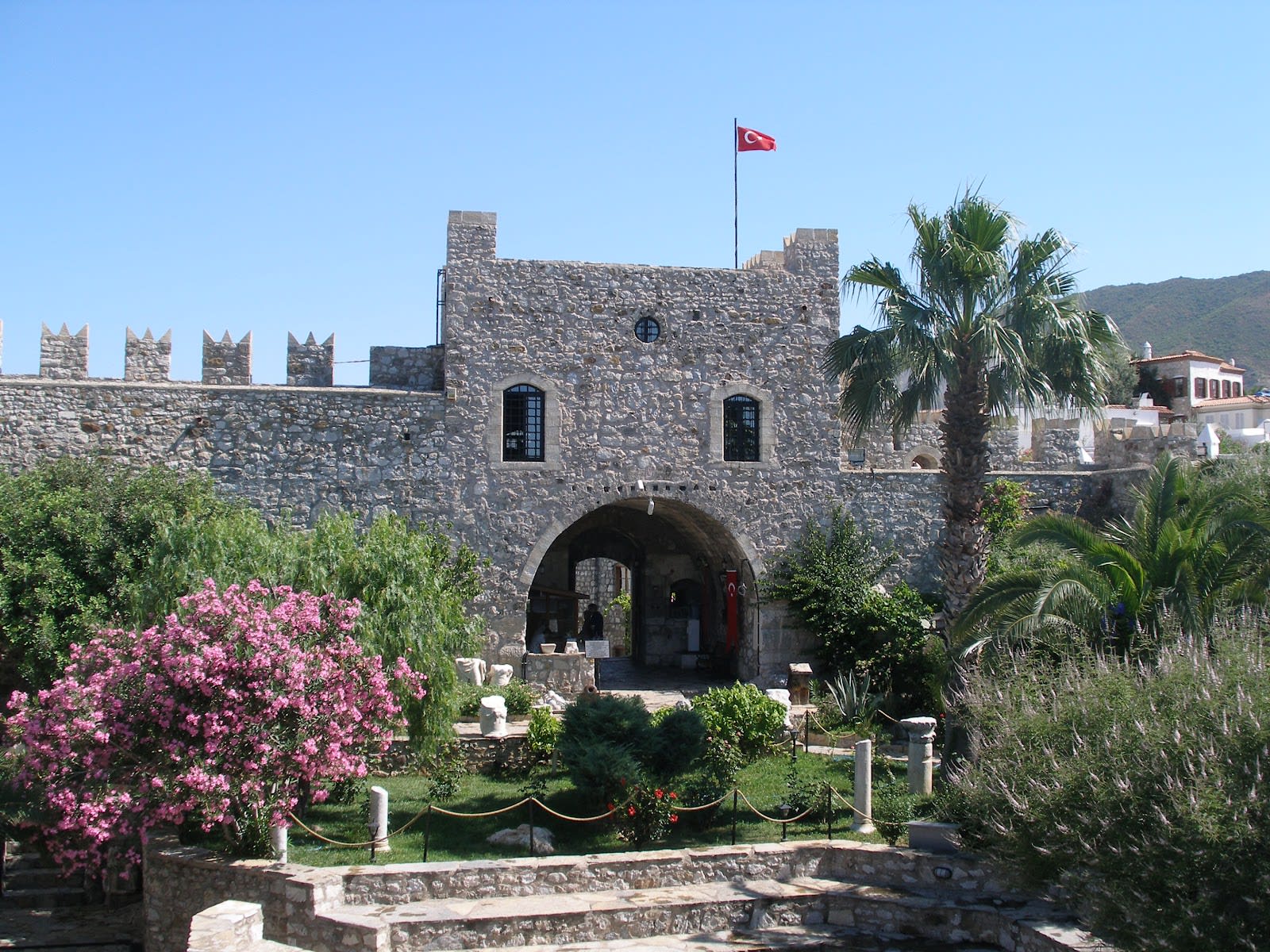
Marmaris is a district center at Mugla province of Aegean Region. It is in front of a bay which partially closed by islands and the edge of the peninsula at SW of Turkey, an area between the Mediterranean and the Aegean Sea. Marmaris is on 36 ° 51 ¹ N longitude, 28 ° 16 ¹ E altitude. Marmaris is surrounded by the Gulf of Kerme and Reşadiye Peninsula from the west, Mugla from north and Mount Balan, Montenegro hills from east and sea from the south. There is a semi island called Adaköy in front of the shore of the bay, in front of it there are Badr Island, Goat Island and Pigeon. The oldest settlement of town is Castle district which is built on a hill of limestone stretched out to the sea. Marmaris then has developed along the coast, and skirts to the right.
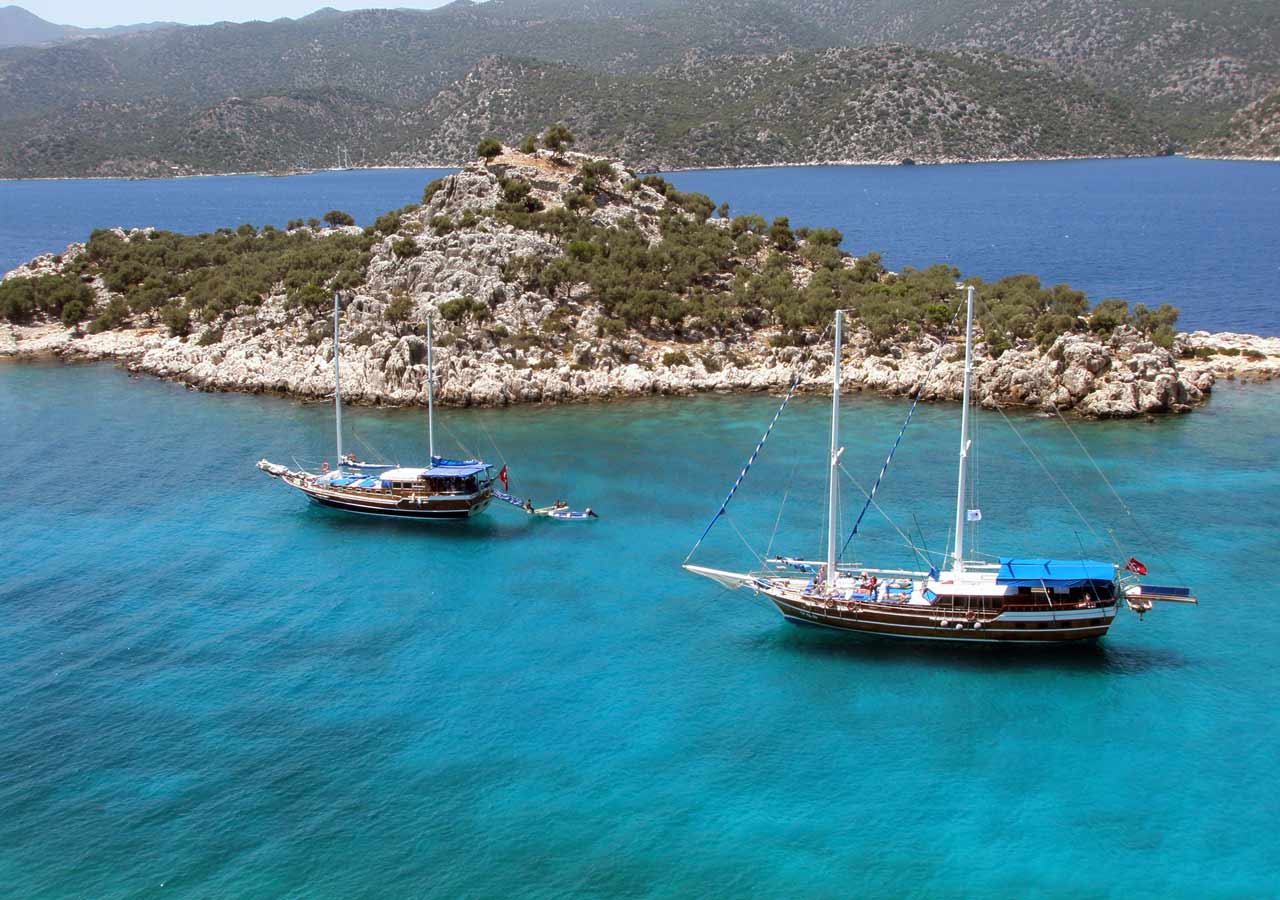
Its position makes it easy to reach to both Marmaris and nearby locations which smells history and natural beauty. Dalaman airport is only an hour away. Bus station makes other cities within easy reach. There are so many nearby historical and natural beauties around Marmaris which you can arrange daily tours to visit and continue your evening in Marmaris night life. Marmaris also is a good location to visit Greek islands like Rodos which is only 45 minutes away and there are daily tours. Yachts routes usually have Marmaris drop. Pristine bays will meet you whether you sail with bareboat or sail on the deck of gullet. There are all the most extensive offerings of a high-capacity yacht marina such as wintering, maintenance, repair facilities for 12 months.
Name Origin of Marmaris
The city was founded on the hill where Marmaris is now by early settlers of Turkmen during Byzantine period. It was named as mermer town (Marble). During the rule of the golden age of Menteseogullari, thanks to international trade, Mermeris (marble city) was the name. It replaced the Fiskos role in ancient times which was ruined and extinct because of Natural disasters, looting and taking share from pillage until 1522. . "Mermeris" The name, Greek Marmaras, Italian (Latin) Marmarice / Marmaris, Marmorice to English, as, according to interest translated into actuality. The name of Marmaris was heavily used during the Italian occupation of World War. It was formalized with the Republican era.
Herodotus Bodrum and the famous geographer Strabo of Amasya'lı mentions about Fiskos in ancient times. Both of them settled in their peak periods. It is impossible that they call Marmaris with the name of Marmarisos. Where they have lived must be under the sea, or must have been an island. According to one saying, Suleiman the Magnificent Suleiman the Magnificent still did not like the castle in Marmaris he has ordered. And Marmaris name comes from Mimar as (Hang Architect).
History
- Marmaris history goes up to BC 12000. It has been confirmed as a result of Nimara excavations in the cave of the Badr Island in 2007. Then Caria name is given to this region which means Kar country. Fertility of Aegean and Mediterranean coasts has made this area attractive. City was the most important bridge to Aegean islands and Rhodes. Thus, Marmaris has become a place of many civilizations reigns throughout the history. In trips to region you can see traces of Karia, Rhodes and the island civilizations, Egyptian, Assyrian, Ionian, Persians, Macedonians, Syrians, Romans, Byzantine, Seljuk and Ottoman civilizations. The first name of the city is fiskos. Today you can see the ruins at the so-called Combined Asartepe.
- BC 3500 the first city walls are built for Fiskos, a city of Karian. You can watch the ruins of Fiskos from Asar hill north-eastern slopes in Marmaris Beldibi. At BC 7000 YY Loryma the ancient city (today in the Gulf of Symi, Bozukkale in Taslica) is established.
- BC 546 of Persia dominance in the region.
- BC 334 Alexander the Great invaded the region.
- BC 323 Alexander the Great dies. Even Caria enters the sovereignty of the kingdom of Pergamum; Fiskos is the most important port city of Egypt / Rhodes, Empire in Southwest Anatolia.
- BC 226 severe earthquake occurs.
- BC 133 Roman dominance in the region.
- AC 395 the Byzantine period.
- AC 670 the beginning of the Arab invasion. Many cities destroyed as a result of these raids.
- AC 1010-1286 Period of Turcoman tribes and the Anatolian Seljuk State. First residential units established in the Tepe (Peak) District and The name "Mermeris" was given.
- AC 1286 Menteshe period. In the 1300 Mermeris is an important port for both commercial and military point of view, as in ancient times, Fiskos was,
- AC 1300 plays an important role as a naval base conquest of the island of Rhodes by the Menteshe. An important port of loading for Marble and timber trade in the Eastern Mediterranean
- AC 1391 Ottoman dominance in the region after the death of Ghazi Ahmed.
- AC 1402 Menteshe sovereignty begins again after Ankara war by the order of Timurlenk.
- AC 1451 restarting of the Ottoman dominance in the region.
- AC 1480 Fatih Sultan Mehmet, and 100,000 soldiers comes, Mermeris to conquer the island of Rhodes with Navy's 150 ships. Strong Ottoman conquest lasted 89 days has failed.
- AC 1517 population of Mermeris 24 people.
- AC 1520-1522 Ottoman Sultan Suleiman the Magnificent comes Mermeris for expedition to Rhodes with 150,000-person army. They conquest Rhodes. He orders the construction a castle, a caravanserai and bridge covering the full range of today's Kısayalı shoreline.
- AC 1525 Mermeris becomes a district under Mugla province.
- AC 1545 completed the construction of the caravanserai and castle.
- AC 1565 Exportation of Sweet gum oil (Storax Orientale) starts for up to 100,000 pounds a year. Mermeris have the only Sweetgum oil in the World. It makes big splash in Europe.
- AC 1789 Mosque of Ibrahim Agha made.
- 1801 for the first time in history, a naval "Extraction Exercise" is done by 200 British war ships for a period of approximately three months.
- AC 1800-1850 The prisoners from the wars of Egypt and Syria are brought to Mermeris.
- AC 1890 Mining begins. Importing countries are Germany, France and Italy. The annual volume exceeds 50,000 tons.
- AC 1913 World War I. A German battleship hides in the port of Marmaris.
- AC 1914 French fleet fire cannons to Marmaris Castle. A great destruction occurs.
- AC 1919 Sevres Treaty between Italy and Greece gets along, and the Italians occupied the region.
- AC 1922 On 22 July, the Italian soldiers leave Marmaris and Marmaris is free.
Ancient Cities in Marmaris
Ancient settlements within the boundaries of Marmaris are as follows: Physkos (Beldibi, Asartepe), Amos (Hisaronu, Turunc), Bybassos (Hisaronu), Kastabos (Hisaronu), Smyrna (Bayırköy), Larymna (Bozburun), Thyssanos (Söğütköy), Phoenix (Taslica), Loryma (Bozukkale) by contracting (Walker's Port), Kedrai (Cedar Island), Euthena and Amnistos (Karacasogut). They are small cities of Caria including Physkos. But none of the others reach beyond the walls and the castle ruins besides Physkos.
Physkos, Physcus, Fyskos, Fisk, Fiske
Fiskos was the first port city and center of other settlements in the region of Caria. Fiskos in Carian language means "Nature city". This name is created because it has all the elements of nature and its beauty within. Known marks go back to 3400 BC. You can see the ruins of this important port town of ancient Caria around Asar hill north of Marmaris city center. However, today only top of city walls on the acropolis stayed. Just like all Caria layouts were established on steep mountain slopes of the hills, Fiskos was settled between the hills and valleys and slopes of the Beldibi Camiavlu.
Herodotus of Bodrum (the father of all historians) and famous geographer Strabo the Amasya mentions about Fiskos in ancient times, as the port of Ephesus and Mylasa for the Eastern Mediterranean. Throughout the existing sovereignties of Southwest Anatolia, It was the only and most important port for the Mediterranean, especially the Eastern Mediterranean. An important road network existed long which connects Fiskos to ancient capitals Mylasa, Alabanda, Troy, Pergamum, Ephesus and Miletus emphasize the importance for the port relations with overseas, especially the "mother country" with Egypt.
Initially, all kinds of trade (the Slave, marble, timber and wine) started with Egyptian, the relations expands with military and civilization. Carian mercenaries involved in the Famous Kadesh war for Hittites have been transported by ship from the port of Fiskos. They joined to Egyptians wars later. Some parts of these Mercenaries formed their own cities (4 pieces) and settled in the Nile Delta. Indeed, the first Carian inscriptions were found here. For the first time Egyptian art of making statues of normal human enters to Southwest Anatolia and the islands was from Fiskos.
Making its own money proves Fiskos was an important center. A very precious metal coin was found in the hands of a collector Mr. Borell of England in 1828. This money is very large, thick, and the extraordinary lengths that has the relief portraying branched horns and a writing of single line with 18 Carian letters "Sigma Phi UPSILON $ Y 2" on the face.
Fiskos joins to Empire of Egypt-Rhodes after the death of Alexander the Great. In this period the level of importance as a commercial port increased. And this position continued later in Roman and Byzantine periods. It is interesting that King of England VIII, Henry mentions about Fiskos in a document in 1513. In addition, the Museum of the Boston Museum specifies that an exhibited marble bust of Roman Emperor, the young Tiberius (Bust of Tiberius) was found in Marmaris (Old Physkos).
Numerous statues, blocs of sculptures and the tablets were found which starts from 4th century BC, especially around Eyiliktaşı. According to archaeologist George Bean, Even though various civilizations throughout history existed in Marmaris, there is a scarcity of surviving remains for so many of them. Since Fiskos was an always an important port city, they were not buried under ground. In contrast they were loaded to ships piece by piece and were used in other city projects. Because the hill slopes city was established are still evident today. Only famous harbor of Fiskos is under ground.